Vietnam Train Hard Sleeper: 6-Berth Cabin Guide & Tips
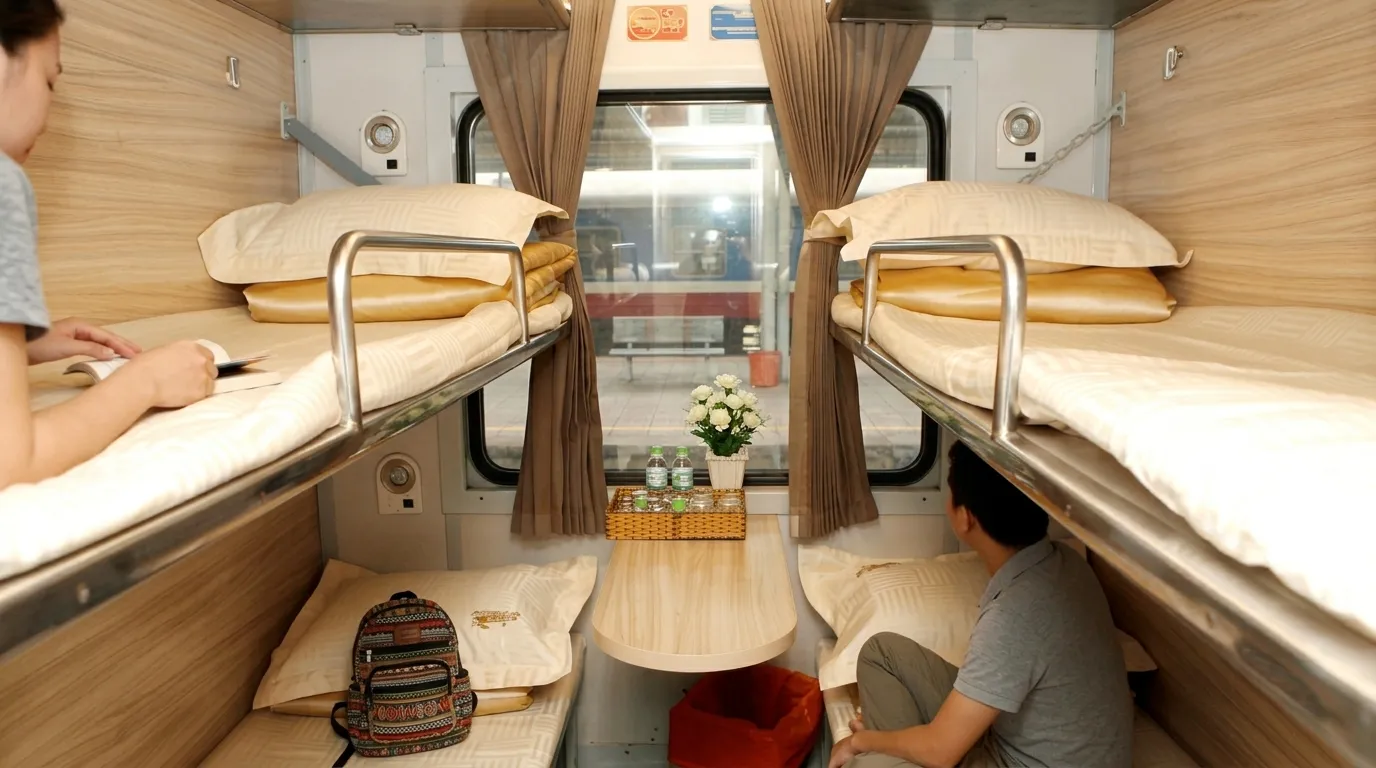
Vietnam Train Hard Sleeper: Inside the 6-Berth Cabin
The Reunification Express is a machine of pure utility, grinding its way up and down the Vietnamese coast day and night. If you are crossing this country on a strict budget, you will eventually find yourself staring down the corridor of a Vietnam train hard sleeper. It saves you the cost of a hotel room while moving you hundreds of miles down the coast. But the vertical space is brutally tight, and the top bunks require agility. Here is the unvarnished truth about riding in a 6-berth cabin, how to pick the right bed, and when to secure your tickets at vietnamesetrain.com.
What Exactly is a Hard Sleeper?
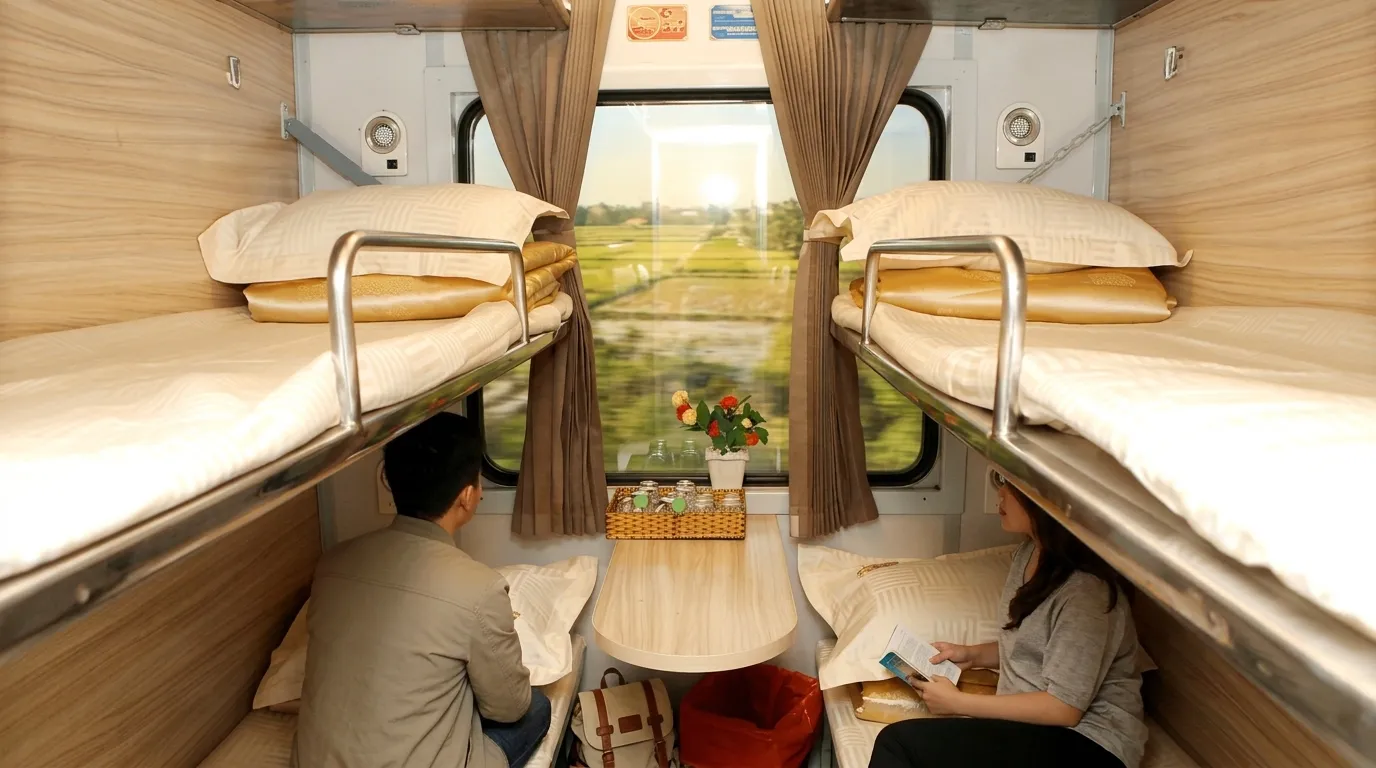
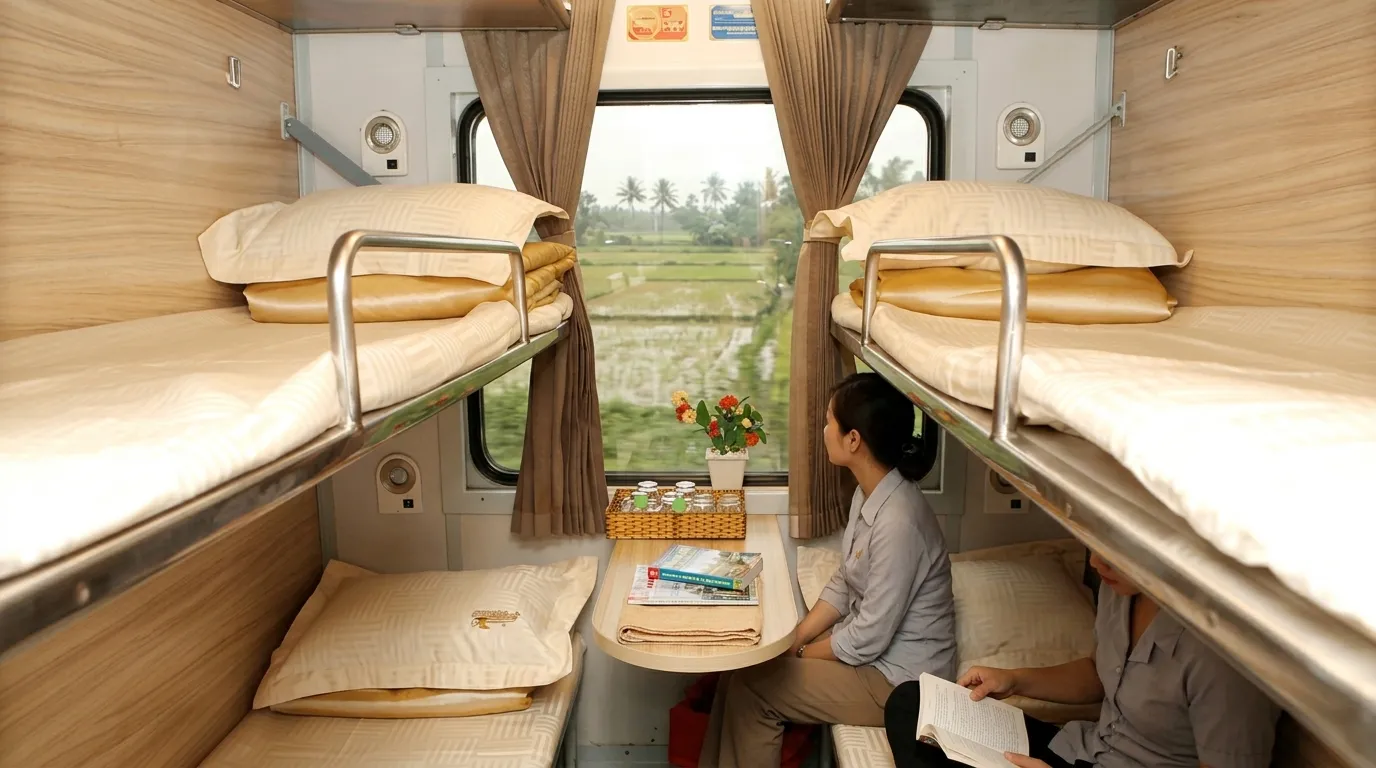
The name "hard sleeper" is a slight mistranslation that terrifies first-time visitors. You are not sleeping on bare wood. You get a padded mattress, a clean sheet, a blanket, and a pillow. The "hard" designation simply differentiates it from the plush, 4-berth soft sleeper cabins.
- Cabin Layout: Six beds total. Three on the left, three on the right.
- Bed Types: Bottom (most expensive, most headroom), Middle (tight), Top (cheapest, claustrophobic).
- Mattress: Roughly 1 inch thick. It is firm.
- Air Conditioning: Yes, centrally controlled and usually blasting cold air.
- Luggage Storage: Under the bottom bunks and in a large nook above the corridor door.
If you value personal space over saving a few dollars, you might want to compare this setup with the Vietnam Train Soft Sleeper. But for pure economic efficiency, the 6-berth cabin dominates.
Bunk Choice: Why the Bottom Bed Matters
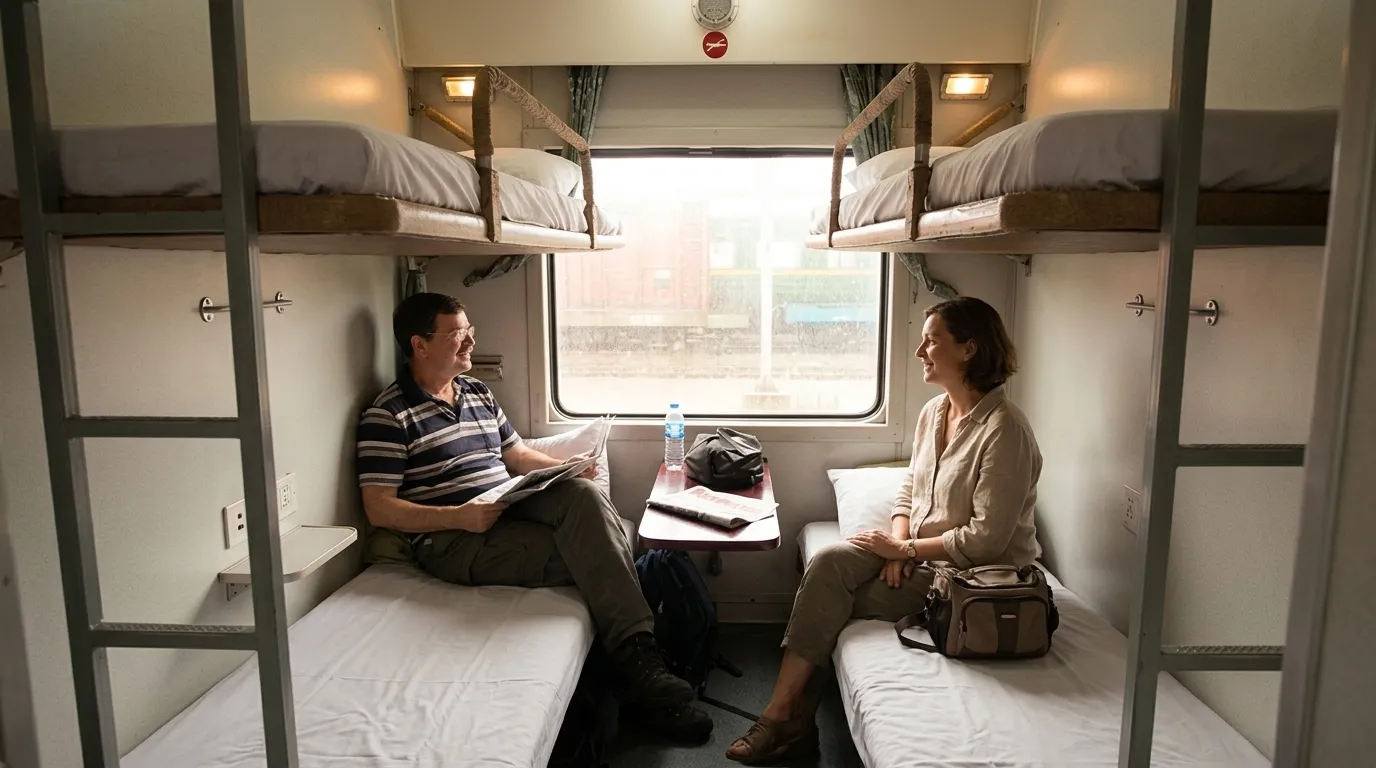
The bottom bunk is the prize. You can sit fully upright, get direct access to the shared table under the window, and easily watch the countryside roll by. The middle bunk requires a bit of a crouch. You cannot sit up straight, so you will spend your time either lying down or propped up on your elbows. The top bunk is inches from the ceiling and strictly for sleeping.
To reach the middle and top bunks, you must use a small, fold-out metal step attached to the wall near the cabin door. You step on this, grab a metal handle, hoist yourself up, and swing your legs onto your mattress. It requires upper body strength and decent balance. Elderly travelers, pregnant women, and anyone with mobility issues must absolutely avoid the middle and top bunks. If you are traveling with older family members, secure the bottom bunks months in advance, or look into Vietnam Train Soft Seats for shorter daytime hops.
Cost and Value: The Best Long-Distance Hack
Why put up with the cramped headroom? Because the price-to-distance ratio is unbeatable. Domestic flight prices in Vietnam can surge last-minute, easily costing over $100 plus baggage fees and airport transfers. The hard sleeper cuts that expense by more than half, includes your luggage, and saves you a night's hotel accommodation.
| Travel Class | Space / Comfort Level | Estimated Price (Hanoi to Hue) |
|---|---|---|
| Hard Sleeper (Top Bunk) | Lie-flat, very cramped headroom | $30 - $35 |
| Hard Sleeper (Bottom Bunk) | Lie-flat, can sit upright | $38 - $45 |
| Soft Sleeper (4-Berth) | Thick mattress, spacious | $48 - $60 |
Notice the price difference between the top and bottom bunks. Vietnam Railways prices beds based on desirability. The bottom bunk is always the most expensive ticket in a hard sleeper cabin, and it is worth every penny.
Popular Routes for Budget Travelers

The overnight journey from Hanoi to Da Nang remains the most popular hard sleeper route, allowing travelers to sleep through the Red River Delta and wake up to coastal views. If you are heading further south, you will eventually hit the Hai Van Pass. If you are doing this segment in daylight, read up on the Da Nang to Hue Train to make sure you are on the correct side of the train.
For those heading north into the mountains instead of south along the coast, the train to Lao Cai operates differently. The tourist trains on this route use private carriages. You can learn more about those specific upgrades in our Hanoi to Sapa Sleeper Train guide.
Luggage Rules and Onboard Amenities
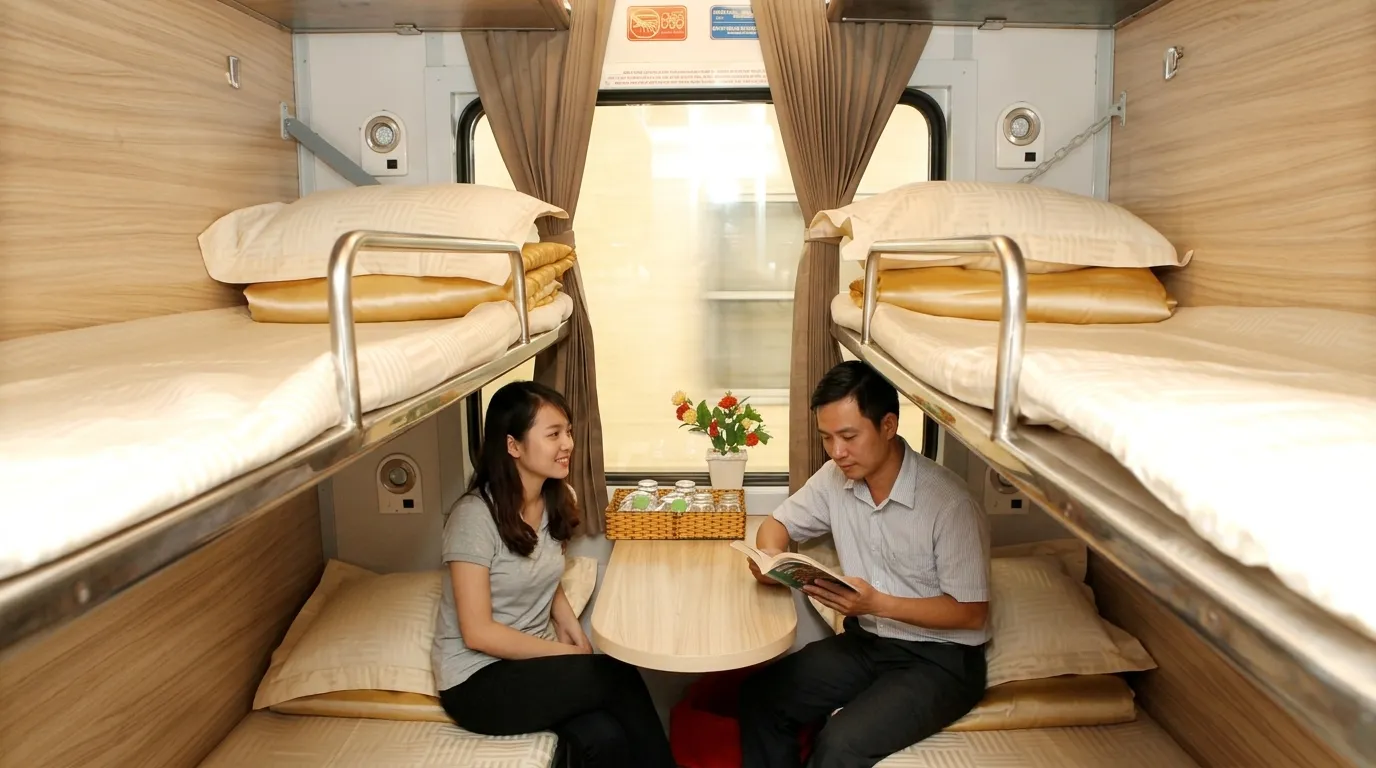
Space is at a premium. Officially, Vietnam Railways allows 20kg of luggage per passenger. Unofficially, no one is weighing your bags. Backpacks and medium-sized soft duffels are your best friends here. You can slide them easily beneath the bottom bunks. If you are assigned a top bunk, there is a large, deep storage alcove directly above the corridor door.
Every carriage has a bathroom at the end. Most trains feature Western-style toilets, though older carriages might still have a squat toilet. Bring your own toilet paper and hand sanitizer. A trolley comes through the corridors selling hot coffee, instant noodles, boiled corn, and sometimes hot meals like rice with braised pork.
7 Pro Tips for Surviving the 6-Berth Cabin
- Secure the bottom bunk early: Bottom bunks sell out weeks in advance during peak season. Use vietnamesetrain.com to lock them in 30 to 60 days ahead of your journey.
- Pack a cabin bag: Once your main luggage is stowed, you will not want to drag it out. Pack a small tote with your toothbrush, power bank, earplugs, and snacks.
- Dress in warm layers: The air conditioning is notoriously aggressive. Even if it is 95°F outside, your cabin might feel like a meat locker by 2:00 AM.
- Download your entertainment: Cellular signals drop out completely when the train weaves through coastal mountains or rural agricultural zones.
- Bring a sleep mask: The reading lights in the cabin can be controlled individually, but the corridor lights stay on all night. The gap under the cabin door lets in glare.
- Secure your valuables: Violent crime is incredibly rare, but petty opportunistic theft can happen. Sleep with your passport, wallet, and phone in a money belt. Check out more Tips & Tricks for First-Time Train Travelers for safety advice.
- Bring wet wipes: The bathrooms get heavily used on a 16-hour journey. A pack of antibacterial wipes will make your morning routine much more pleasant.
Frequently Asked Questions
What is the difference between a hard sleeper and a soft sleeper on Vietnam trains?
The hard sleeper features a 6-berth layout with three tiers of beds on each side, offering less vertical space. The soft sleeper is a 4-berth cabin with two tiers, providing more headroom and a thicker mattress.
Is the hard sleeper suitable for elderly passengers?
Elderly passengers or those with limited mobility should only book the bottom bunk. Accessing the middle and top bunks requires climbing a narrow, vertical metal wall bracket, which can be difficult and unsafe.
Does the hard sleeper have a mattress?
Yes. The term 'hard sleeper' is a mistranslation. The beds have a firm mattress about 1 inch thick, and passengers are provided with clean sheets, a pillow, and a blanket.
Where do I store my luggage in a 6-berth cabin?
Large luggage can be stored in the gap under the bottom bunks or in a deep storage alcove located directly above the cabin door. Keep small valuables in your bed while sleeping.
Do hard sleeper cabins have air conditioning?
Yes, the cabins on the Reunification Express are equipped with central air conditioning. It is usually quite strong and stays on all night, so bringing warm layers is highly recommended.