Vietnam Train Soft Sleeper: 2026 Prices & Booking Tips
Key Takeaway: A bed in a Vietnam train soft sleeper 4-berth cabin typically costs between $35 and $60 for standard overnight routes like Hanoi to Hue (14 hours). Lower berths offer the most headroom and sell out weeks in advance. For the best selection on modern SE-class trains, check latest prices on vietnamesetrain.com at least 30 days before your 2026 departure.
The rhythmic clatter of steel wheels on narrow-gauge tracks is the heartbeat of Vietnamese travel. You fall asleep to the blur of Hanoi's neon outskirts. You wake up to misty rice paddies and water buffalo grazing beside the tracks. This is the reality of the Reunification Express. But surviving a 14-hour overnight journey requires booking the right ticket. A Vietnam train soft sleeper 4-berth is the sweet spot between backpacker budget and private luxury. It gives you a flat bed, air conditioning, and a locking door.
Hard seats are pure misery for night travel. Six-berth hard sleepers feel claustrophobic, with minimal headroom and harder mattresses. So, the four-berth soft sleeper becomes the default choice for savvy travelers connecting the North, Central, and South. The beds are padded enough for a proper night's rest. And the shared cabin setup often leads to shared snacks and broken-English conversations with local families, creating memories you simply cannot get at 30,000 feet in an airplane.
Here is exactly how to navigate Vietnam's night trains, choose the best routes, and secure the right berth in a Vietnam train soft sleeper without overpaying.
What You Need to Know About a Vietnam Train Soft Sleeper (2026)
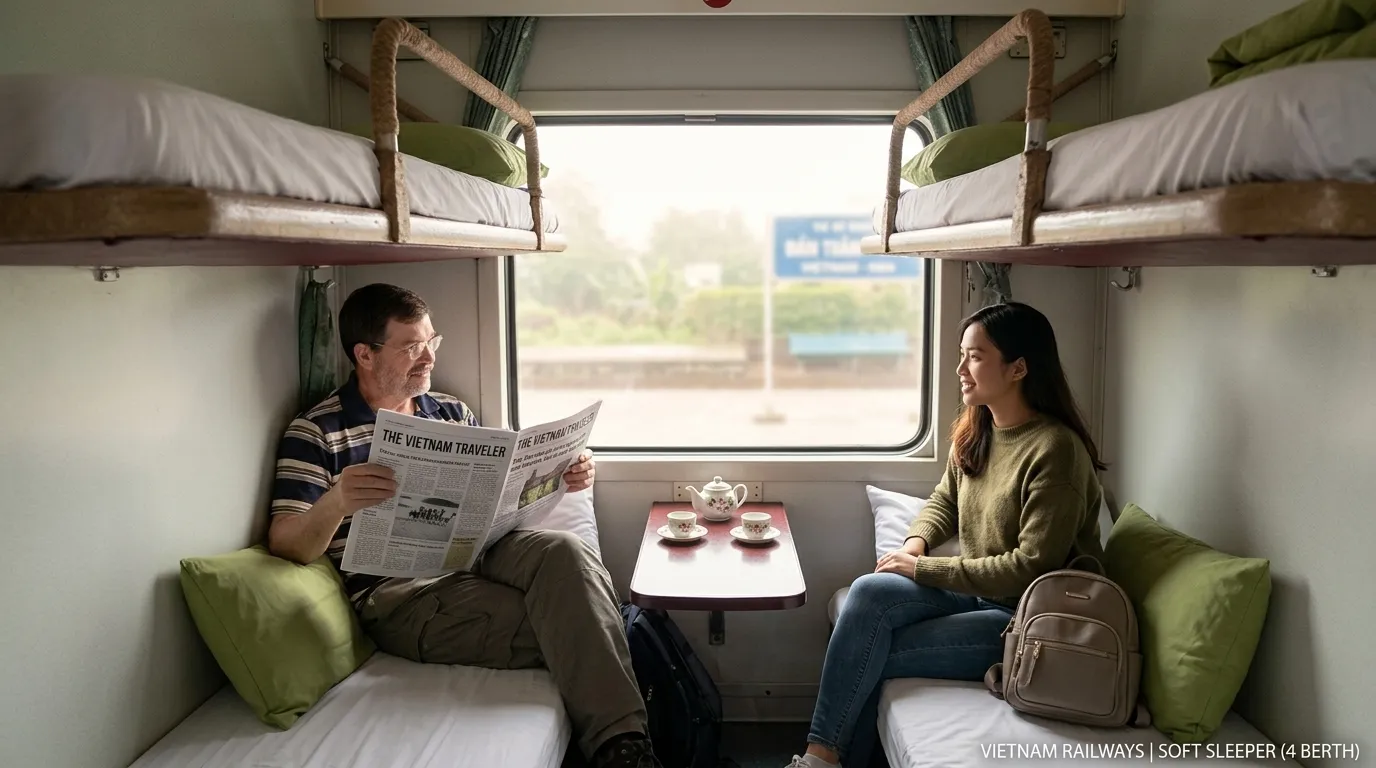
What You Need to Know About a Vietnam Train Soft Sleeper (2026)
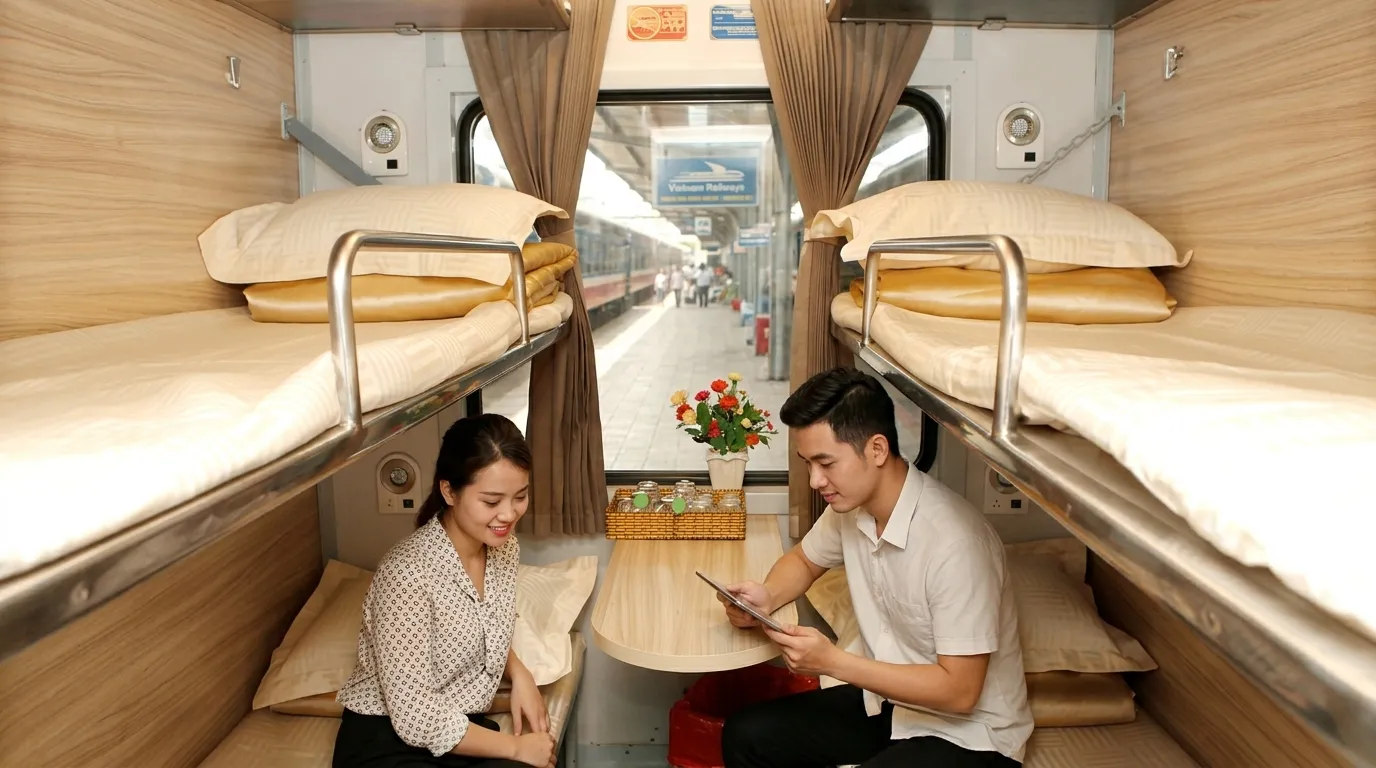
Inside a standard 4-berth soft sleeper cabin on the Reunification Express.
Before you commit to a long-haul railway journey, understand the ground rules. The 2026 standard for a soft sleeper cabin includes four beds, individual reading lights, and aggressive air conditioning.
The Setup: Two lower bunks and two upper bunks facing each other. A small shared table sits by the window, perfect for enjoying a morning coffee as the countryside rolls by.
Bedding: Vietnam Railways provides a mattress pad, a clean sheet, a pillow, and a lightweight blanket. The mattresses in soft sleepers are noticeably thicker than those in hard sleepers.
Facilities: Western-style and squat toilets are located at the ends of each carriage. Washbasins are outside the toilets, complete with a large mirror.
Food: Carts roll down the aisles selling instant noodles, boiled corn, and hot coffee. Hot water dispensers are free to use at the end of every car.
Booking Window: Tickets usually open 30 to 60 days in advance. Vietnam Train Travel Guide [2026]: Routes, Classes & Expert Tips covers seasonal release schedules in detail.
The North-South Night Train Routes (2026)
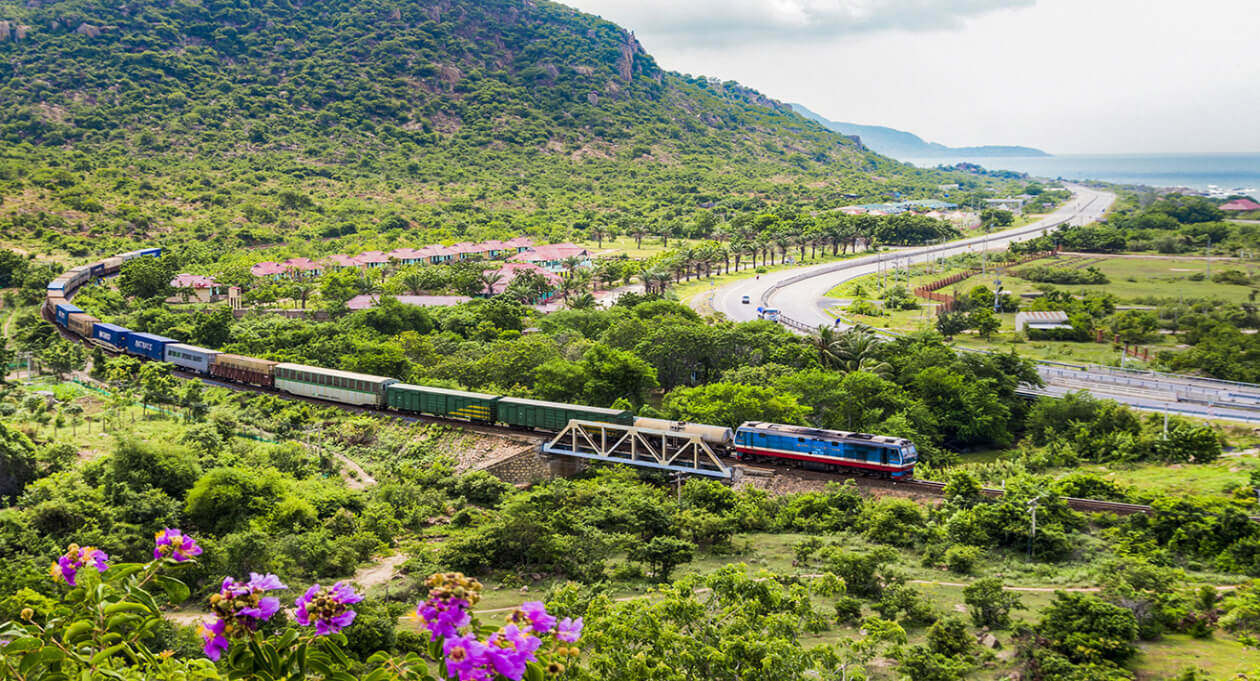
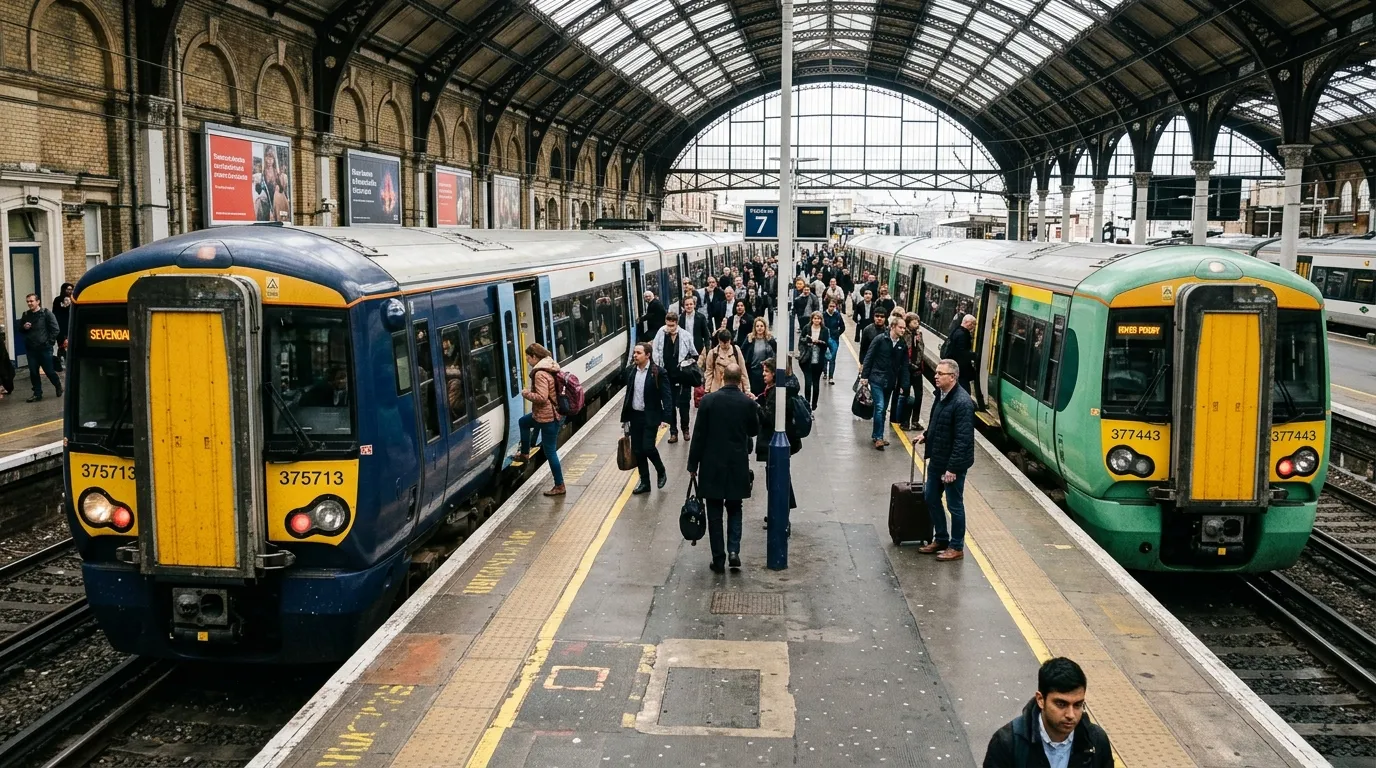
Map and scenery of the popular North-South railway routes.
Vietnam is stretched thin and long. You cannot train from Hanoi to Ho Chi Minh City (Saigon) in a single night. The full journey takes roughly 34 hours. Most travelers break this massive route into overnight chunks, allowing them to sleep through the travel and wake up ready to explore a new city.
The Hanoi to Hue or Da Nang leg is the classic northern departure. You board around 7:00 PM and wake up in Central Vietnam. The Da Nang to Nha Trang route handles the central-to-south transition. Booking a soft sleeper turns a grueling transit day into a cheap hotel night that moves.
For daylight travel along the coast, check out our guide on the Da Nang to Hue Train: Best Seats for Hai Van Pass (2026). But for covering serious distance, night trains are unmatched.
Popular North-South Sleeper Routes & Estimated 2026 PricingTrain RouteAvg. DurationEst. Price (Lower Berth)Book OnlineHanoi to Hue13.5 - 14.5 hours$45 - $55 USDBook via vietnamesetrain.comHanoi to Da Nang16 - 17 hours$50 - $65 USDBook via vietnamesetrain.comDa Nang to Nha Trang9.5 - 11 hours$35 - $45 USDBook via vietnamesetrain.comNha Trang to Saigon8 - 9 hours$25 - $35 USDBook via vietnamesetrain.com
Prices fluctuate based on Vietnamese holidays like Tet. Always Book Vietnam Train Tickets Online: 2024 Booking Guide [New Tips] early if traveling in January or February.
SE Trains vs. TN Trains: Choosing Your Rolling Stock
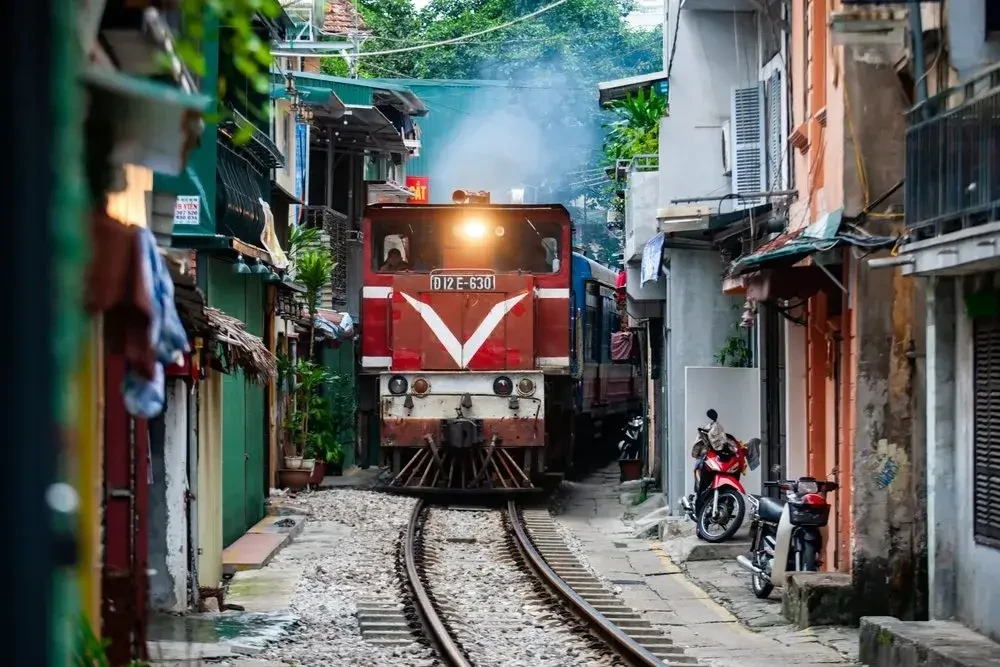
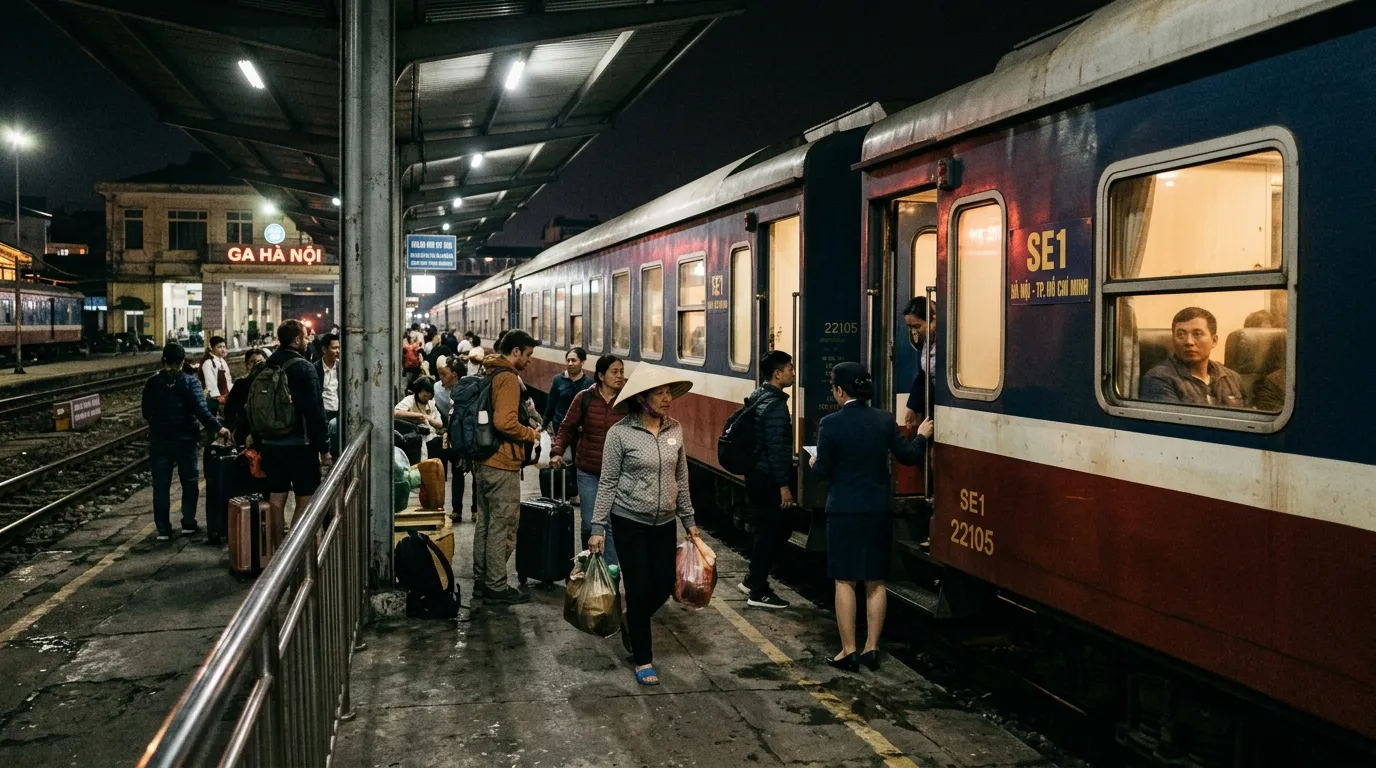
Exterior of a modern SE Express train at Hanoi Station.
Not all trains are created equal. Vietnam Railways operates two main categories on the North-South line: SE and TN. Ignore TN trains entirely. They are slow, older, and stop at every minor village.
You want an SE train. Specifically, SE1, SE2, SE3, and SE4 are the premier express services. The SE3 and SE4 trains feature the newest carriages with upgraded suspension, meaning you actually sleep instead of bouncing off the walls. According to The Man in Seat 61, these express trains are the most reliable way to traverse the country.
Private Tourist Carriages
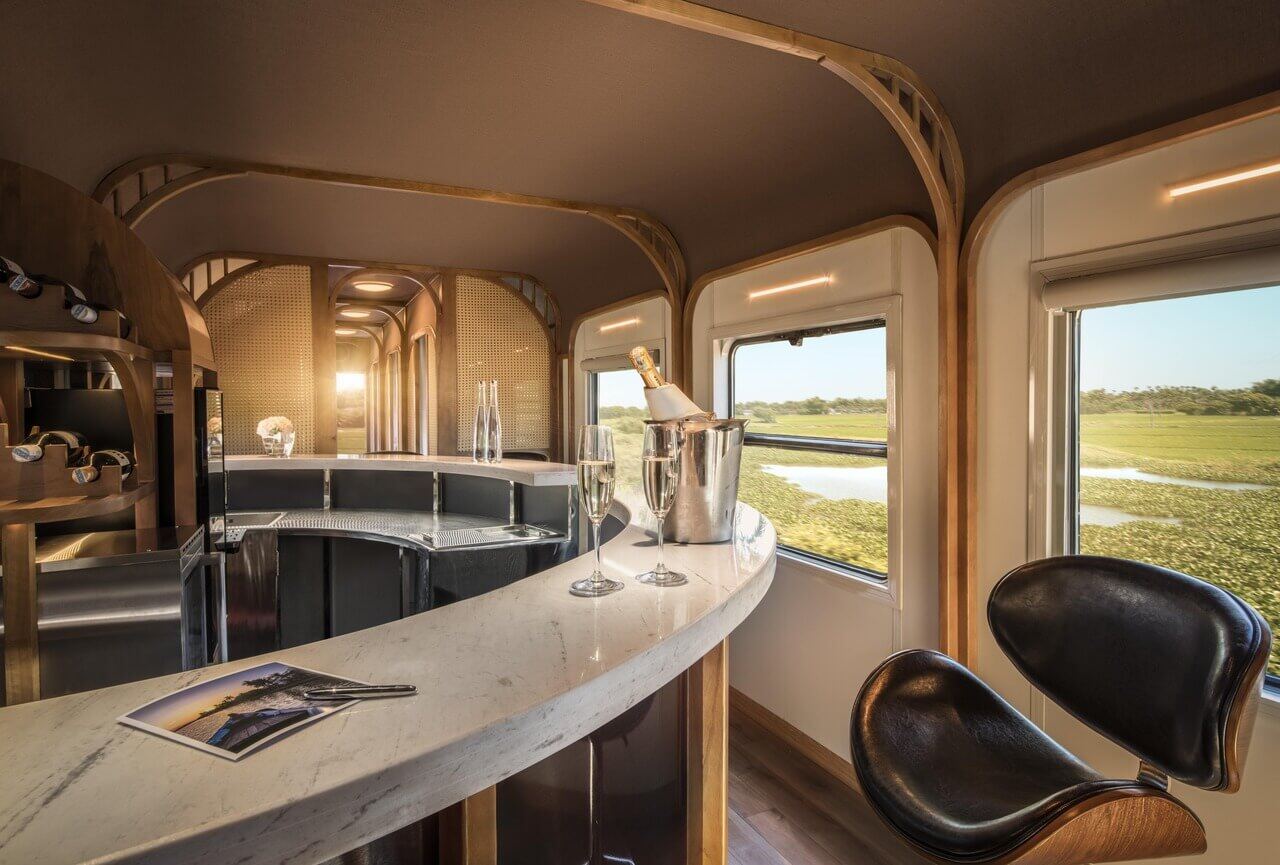
If you want a softer mattress and cleaner bathrooms, look for private carriages. Companies like Laman Express, Lotus Train, and Violette attach their own VIP sleeping cars to the standard SE trains. You get the same travel time but a much better cabin environment. The Hanoi to Sapa Sleeper Train: Luxury vs Standard Cabins route is famous for these, but they also run on the Hanoi-Da Nang line. To guarantee a spot in these premium cars, book your tourist sleeper early.
Vietnam Train Types & Quality ComparisonTrain NumberCarriage QualityBest ForBooking LinkSE1 / SE2Modern, clean, standard ACReliable North-South travelBook SE1/SE2SE3 / SE4Newest state-run carriagesLight sleepers, smoother rideBook SE3/SE4Private (Lotus, Violette)Upgraded bedding, free snacksCouples, families, premium comfortBook Tourist Sleeper
Inside the Vietnam Train Soft Sleeper 4-Berth Cabin
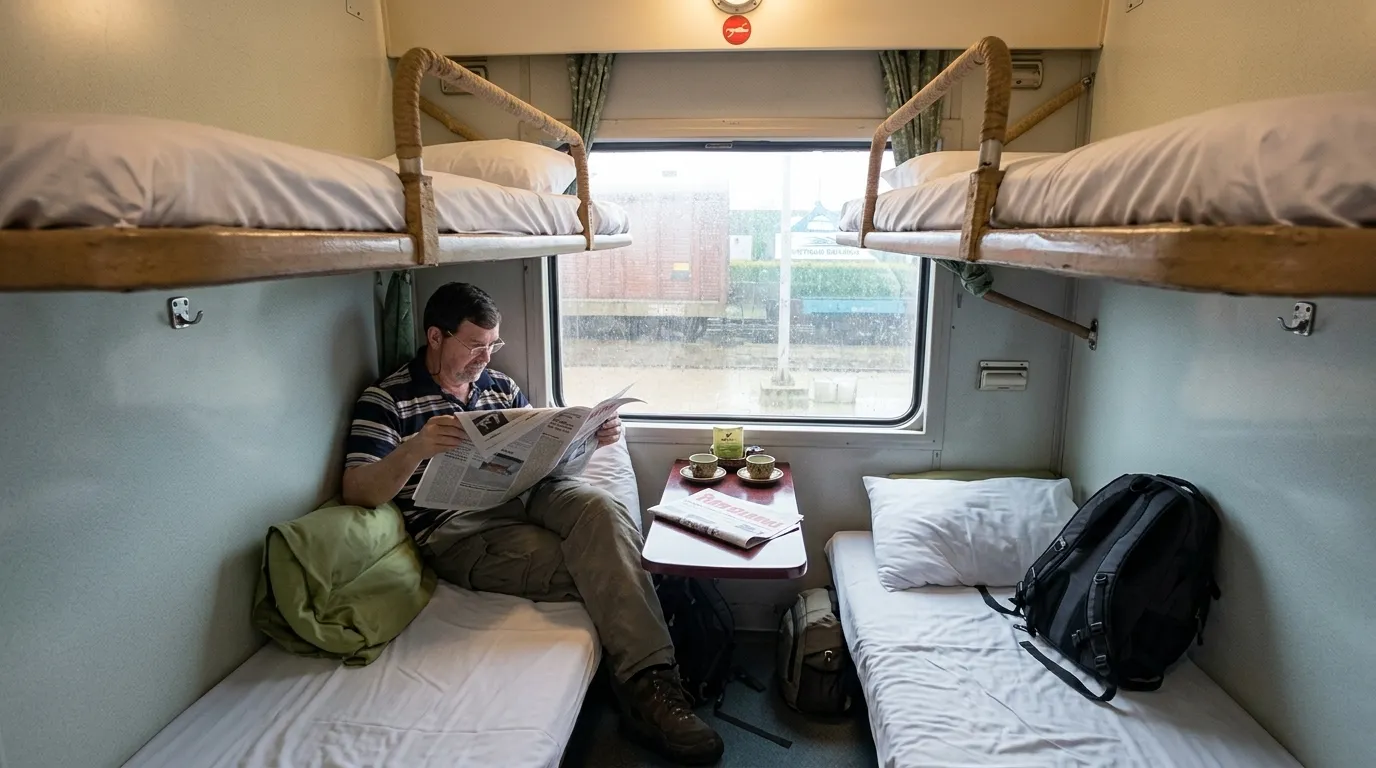
Inside the Vietnam Train Soft Sleeper 4-Berth Cabin
Luggage storage and seating arrangements inside a 4-berth cabin.
Your ticket dictates your experience. The Vietnam train soft sleeper 4-berth cabins force a choice: upper or lower bunk.
The lower berth is the undisputed king of train travel. You get a window view. You get a table. You can sit up straight without hitting your head on the ceiling. Because lower berths offer significantly more headroom and convenience, they cost about 10-15% more than upper berths and sell out first.
The upper berth requires climbing a small metal ladder. Once up there, you cannot sit up completely. But it does offer more privacy and puts you closer to the air conditioning vent (which can be a blessing or a curse). If you are traveling as a couple or a group of four, booking the entire cabin ensures total privacy and control over the space.
Luggage Rules and Storage
Official guidelines from Vietnam Railways (VNR) state a 20kg limit per passenger. In reality, nobody weighs your bags. If you can carry it onto the train, it rides with you.
Store large backpacks and medium suitcases under the lower bunks. There is a spacious gap beneath the bottom beds that easily accommodates standard 65L backpacks or carry-on suitcases. Smaller daypacks should go on your bed, against the wall. Never leave valuables on the shared table overnight.
Comparing Soft Sleeper vs. Hard Sleeper vs. Sleeper Bus
Many travelers debate between taking a Vietnam train soft sleeper, a hard sleeper, or a sleeper bus. Here is why the soft sleeper usually wins:
Hard Sleeper (6-Berth): These cabins have three tiers of beds. The beds are narrower, the mattresses are thinner, and the top bunk has so little space you must slide in flat. It is cheaper, but significantly less comfortable for journeys over 8 hours.
Sleeper Bus: Buses are faster and cheaper than trains, but they are notorious for erratic driving, constant honking, and cramped, plastic-covered beds that are too short for anyone over 5'8" (175cm).
Soft Sleeper (4-Berth): Offers the best balance of safety, comfort, and space. You can walk around, use a proper bathroom, and actually sleep horizontally without fearing for your life on mountain roads.
How to Book Your Vietnam Train Soft Sleeper Online
Booking train tickets in Vietnam used to require showing up at the station with cash. Today, the process is entirely digital, but it still has quirks. The official government website often rejects foreign credit cards and struggles with international IP addresses.
To secure a Vietnam train soft sleeper without the headache, use a trusted agency. At vietnamesetrain.com, you can view real-time availability, select your exact berth (upper or lower), and pay securely with international cards. Once booked, you receive an e-ticket with a QR code. Simply show this QR code on your phone to the conductor when boarding—no printing required.
7 Pro Tips for Surviving Vietnam's Night Trains
Even in a soft sleeper, a 14-hour train ride tests your patience. We highly recommend reading our full Tips & Tricks for First-Time Train Travelers in Vietnam, but here are the absolute essentials:
Bring packing tape: The AC vents blast arctic air directly onto the upper bunks. Tape a piece of paper over the vent to deflect the draft.
Pack a sleeping liner: The sheets are washed, but a silk sleeping bag liner adds an extra layer of hygiene and warmth.
Download your entertainment: Train Wi-Fi is a myth. Mobile data drops out constantly in the mountains and rural stretches.
BYO toilet paper: The bathrooms are well-stocked at departure. By hour 10, the paper is gone. Bring your own roll and hand sanitizer.
Utilize the hot water: Every carriage has a boiling water dispenser. Bring instant noodles, tea bags, and a travel mug for a cheap, safe midnight snack.
Secure your cabin door: The 4-berth cabins have a deadbolt on the inside. Lock it when everyone is asleep.
Use a reliable booking agent: The official railway site rejects many foreign credit cards. How to Book Your Vietnamese Train Tickets Online explains why using vietnamesetrain.com saves you hours of frustration.
Frequently Asked Questions
What is the price of a 4-berth soft sleeper on a Vietnam train?
The standard ticket price for a Vietnam train soft sleeper 4-berth cabin typically ranges from $35 to $60 USD, depending on the distance and train class. For example, the 14-hour route from Hanoi to Hue usually falls within this price range, with lower berths costing slightly more than upper berths.
What amenities are provided in a soft sleeper cabin?
The 2026 standard soft sleeper cabin features four beds with thick mattresses, clean sheets, pillows, light blankets, individual reading lights, and power outlets. The cabins are air-conditioned, and each carriage has Western-style toilets and public washbasins at the ends.
How far in advance should I book my Vietnam train tickets?
It is highly recommended to book your Vietnam train soft sleeper tickets at least 30 to 60 days in advance to secure popular lower berths. During holidays like Tet or peak tourist seasons, tickets for popular routes sell out very quickly after release.
How long does the train from Hanoi to Ho Chi Minh City take?
The full North-South Reunification Express journey from Hanoi to Ho Chi Minh City takes approximately 34 hours. Most travelers choose to break this massive journey into overnight segments, such as Hanoi to Hue or Da Nang, to save on accommodation while exploring cities along the way.
Is there food service available on Vietnam trains?
Yes, mobile food carts travel through the train selling instant noodles, boiled corn, hot coffee, and various snacks. Free hot water dispensers are also available in the carriages. While simple hot meals are provided, long-distance travelers are advised to bring their preferred snacks and drinking water.