Vietnam Train Soft Seats: Smart Travel Tips & Prices
Key Takeaway: Vietnam train soft seats (Ngồi Mềm Điều Hòa) are the smartest choice for daytime journeys under 6 hours, costing roughly $8 to $15 for popular routes like Da Nang to Hue or Ho Chi Minh City to Phan Thiet. You get airline-style reclining seats, aggressive air-conditioning, and plenty of legroom without paying sleeper-cabin prices. For guaranteed side-by-side seating on these fast-selling daytime routes, book train tickets online at least two weeks before travel.
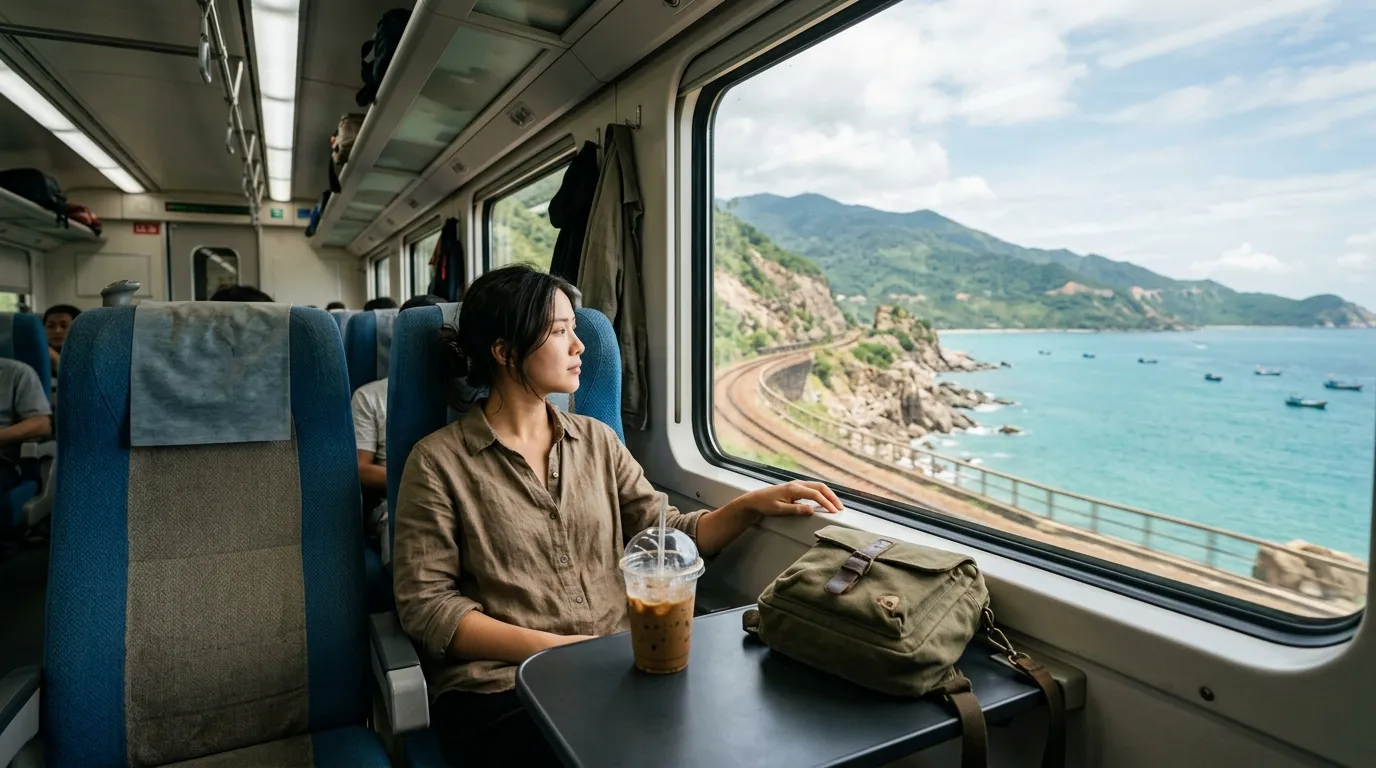
The train leans into the cliffside curve, and suddenly the sparkling East Sea fills your window. You aren't crammed into a sweaty bus. You haven't wasted half your day clearing airport security, either. Instead, you are riding in Vietnam train soft seats, watching the Hai Van Pass roll by with a cold iced coffee in hand. This is how smart travelers tackle daytime intercity hops. For journeys between three and six hours, especially along the central coast and down south, paying for a sleeper bed is overkill. Hard seats, meanwhile, are exactly as punishing as they sound. Soft seats hit the sweet spot. They offer deep recline, aggressive air-conditioning, and massive windows for a fraction of a flight's cost.
Quick Overview: Vietnam Train Soft Seats at a Glance
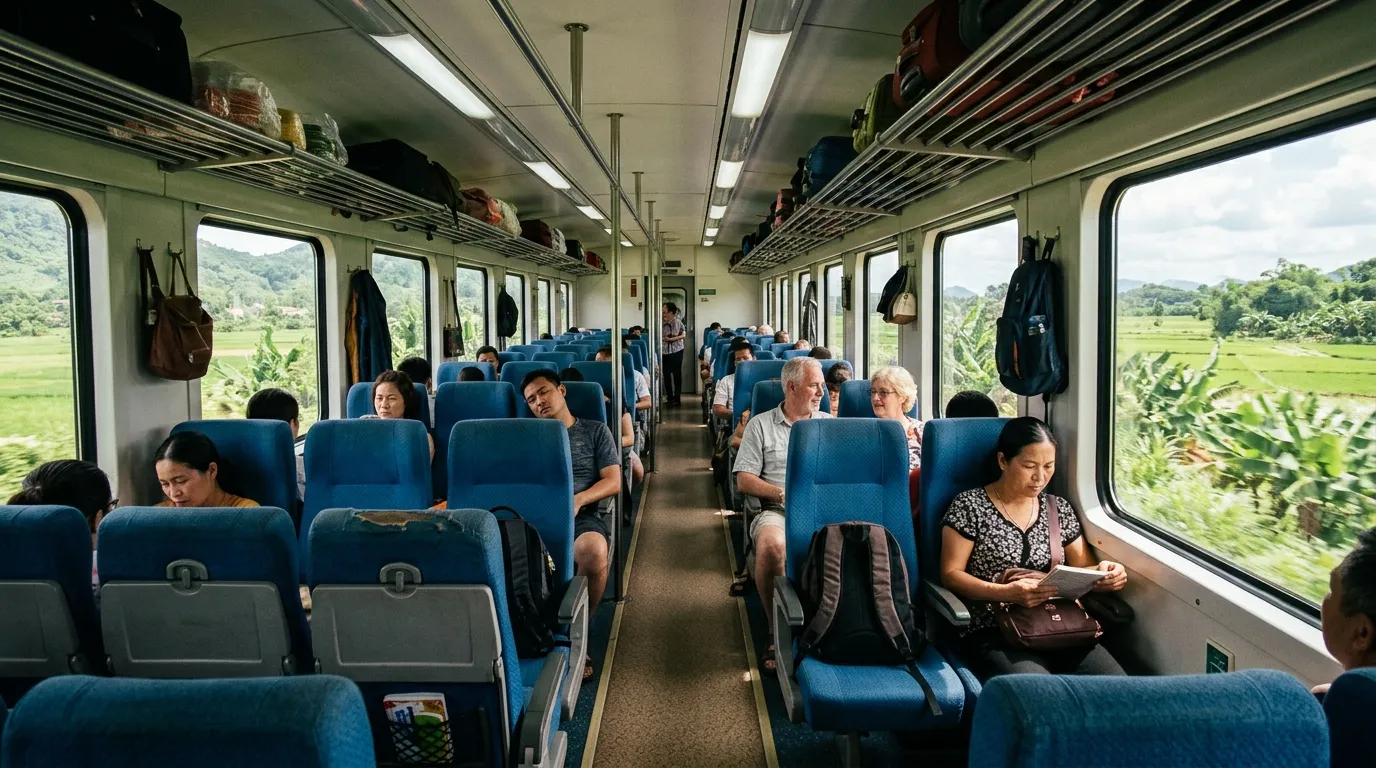
Modern interior of a Vietnam train carriage featuring rows of comfortable blue soft seats.
Vietnamese name: Ngồi Mềm Điều Hòa (Air-conditioned soft seat).
Price range (2026): $6 to $20 depending on distance and train speed.
Seat configuration: 2x2 layout, facing the same direction, with some facing pairs around a shared table.
Best for: Daytime routes lasting 2 to 6 hours (e.g., Central and Southern Vietnam corridors).
Luggage allowance: 20kg per passenger, stored in overhead racks or at the ends of the carriage.
Amenities: Power outlets (on SE trains), tray tables, reading lights, and access to the food trolley.
What Exactly Are Vietnam Train Soft Seats?
Forget the wooden benches of the past. Modern Vietnamese railways have upgraded their daytime rolling stock significantly. A standard Vietnam train soft seat offers roughly 30% more legroom than a domestic economy flight, featuring a 45-degree recline and a dedicated power outlet on most modernized SE-class trains. The seats are padded, upholstered in blue or gray fabric, and designed for genuine comfort during medium-haul trips.
But not all trains are identical. The "SE" trains (like SE1, SE3, SE21) are the express services. These feature the newest carriages and the smoothest rides. The "TN" trains are older, slower, and slightly less comfortable. If you have the choice, always book an SE train. The air-conditioning on these carriages is notoriously strong. Pack a light sweater or jacket, even if it is 35°C (95°F) outside. For a broader look at how these seats fit into the national network, our Vietnam Train Travel Guide [2026]: Routes, Classes & Expert Tips breaks down every class available.
Ready to secure your spot on a modern SE train? Check latest soft seat prices on vietnamesetrain.com.
Top Daytime Routes for Soft Seats (Central & Southern Vietnam)
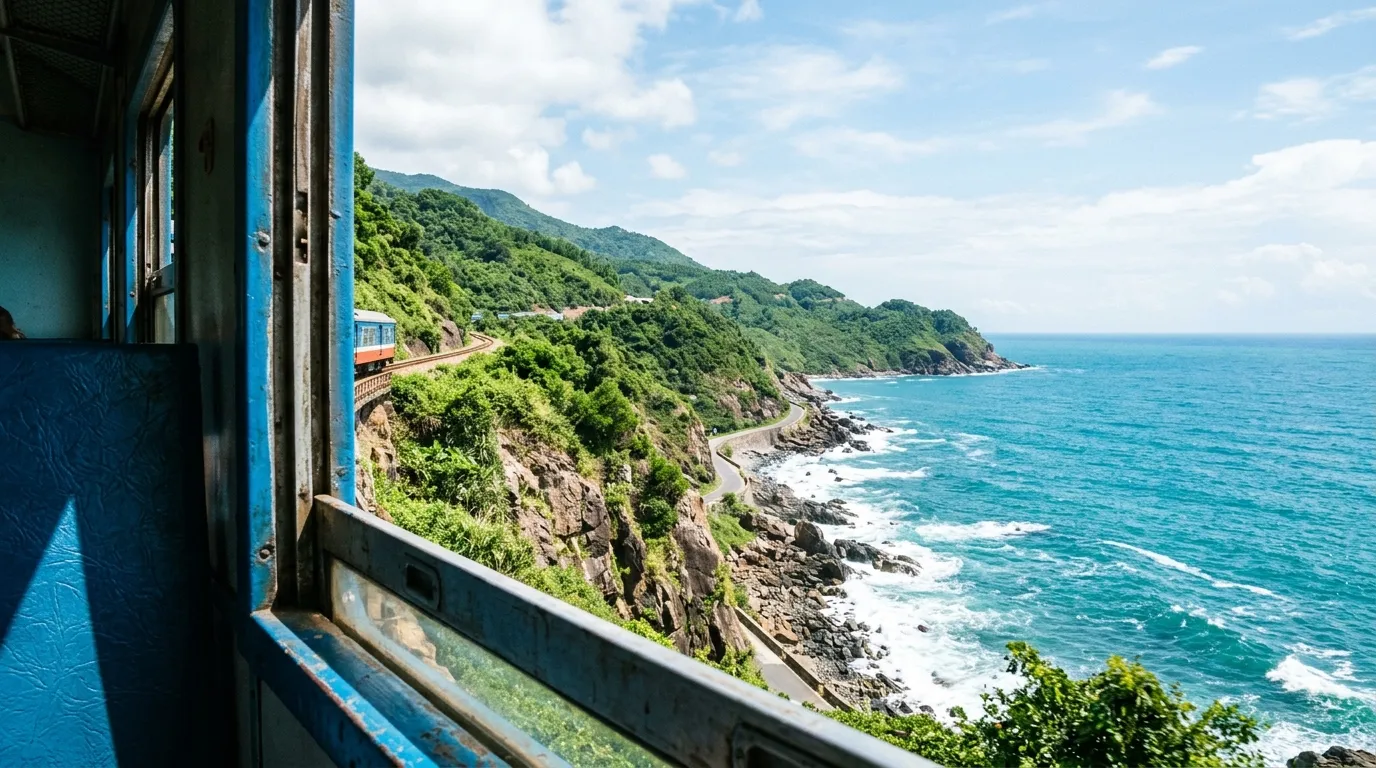
Stunning coastal view of the East Sea from a Vietnam train window near Da Nang.
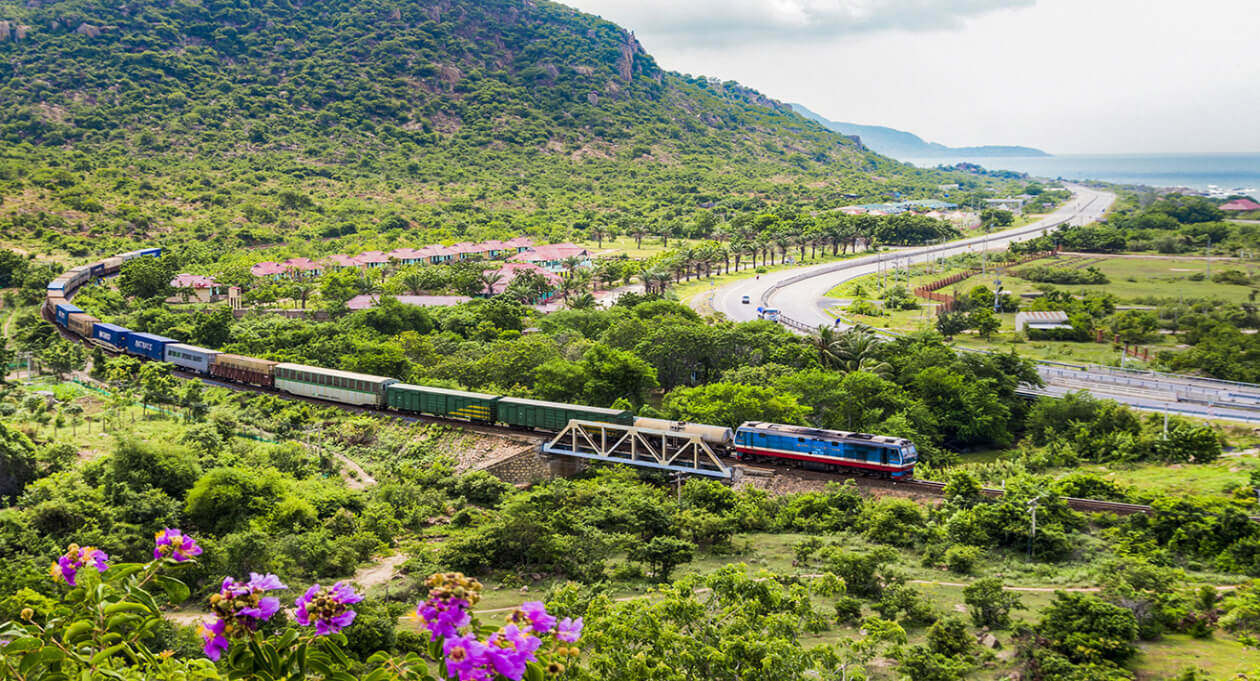
The geography of Vietnam makes it perfect for short train hops. The central and southern regions, in particular, offer spectacular coastal views that you completely miss when flying. The three-hour journey between Da Nang and Hue is widely considered Southeast Asia's most scenic rail corridor, hugging the cliffs of the Hai Van Pass.
Here is how the most popular daytime soft seat routes stack up for 2026:
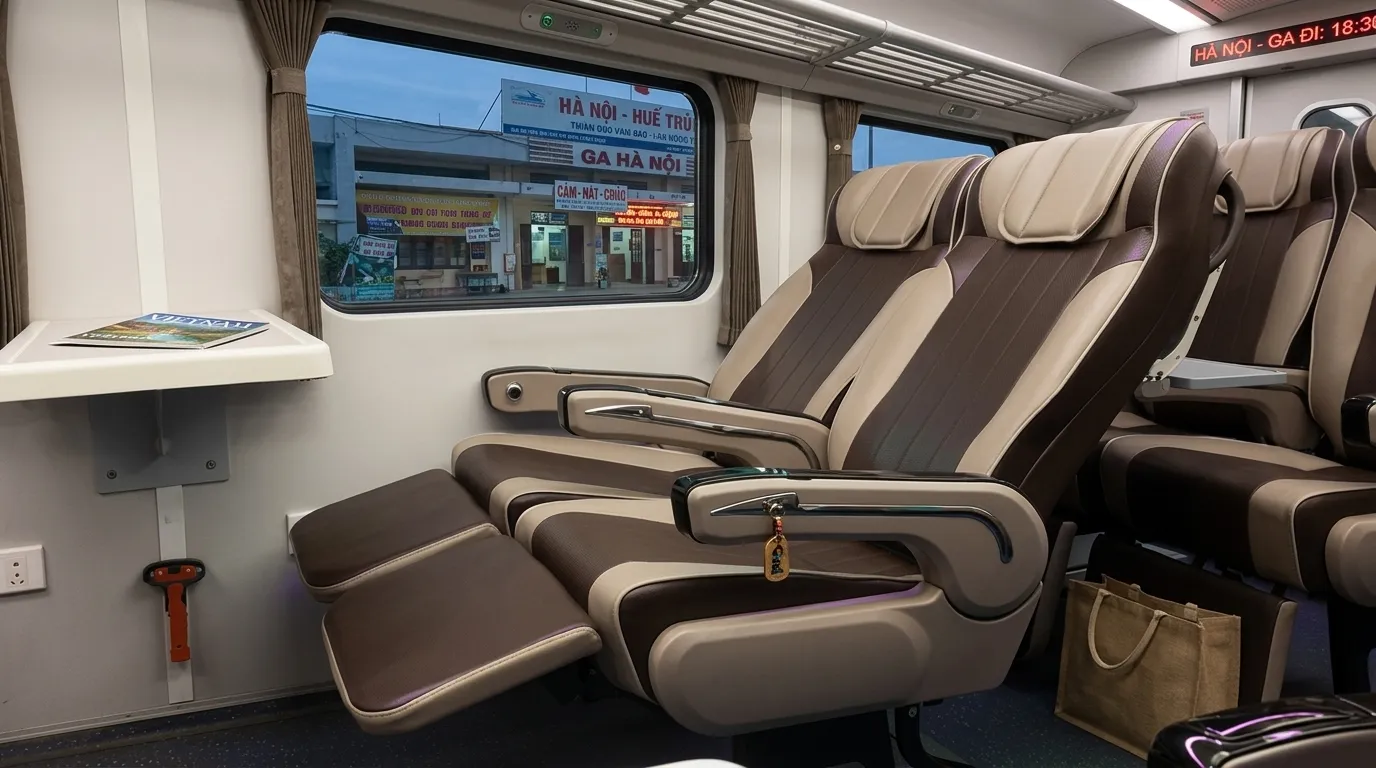
Top Daytime Routes for Soft Seats (Central & Southern Vietnam)
Popular Central & Southern Routes for Soft Seats (2026 Estimates)RouteApprox. DurationSoft Seat Price (USD)Why Ride It?ActionDa Nang to Hue2.5 - 3 hours$8 - $11Unbeatable ocean views along the Hai Van Pass.Book NowHo Chi Minh City to Phan Thiet (Mui Ne)4 hours$10 - $14Bypass highway traffic straight to the beach towns.Book NowNha Trang to Quy Nhon (Dieu Tri)4 - 5 hours$12 - $16Coastal glimpses and smooth, relaxing daytime travel.Book NowHue to Dong Hoi (Phong Nha)3.5 hours$9 - $13The most comfortable way to reach the cave region.Book Now
If you are planning the classic central coast trip, knowing which side of the train to sit on is crucial. Read our detailed breakdown in Da Nang to Hue Train: Best Seats for Hai Van Pass (2026) to make sure you get the ocean view, not a face full of jungle.
Soft Seats vs. Sleeper Cabins: Making the Right Call
Many first-time visitors default to booking sleeper beds for every journey. That is a mistake. Booking a soft seat instead of a lower sleeper berth on a 4-hour daytime route saves you up to 40% on ticket costs while providing much better window visibility.
Sleeper cabins are designed for lying down. If you book a lower berth during the day, you will likely have three strangers sitting on your bed, treating it like a communal sofa. The windows in sleeper cabins are also smaller. Soft seat carriages, on the other hand, feature massive panoramic windows. You get a dedicated tray table for your laptop or snacks. It feels like a proper train journey.
Daytime Travel: Soft Seats vs. SleepersFeatureSoft Seat (Ngồi Mềm)Sleeper Cabin (Giường Nằm)Best ForDaytime trips under 6 hoursOvernight journeys or 8+ hoursScenery ViewingExcellent (Large windows)Fair (Smaller windows, awkward angles)Personal SpaceDedicated reclining seatShared bed space during daytimeCost (Da Nang-Hue)~$10~$16 - $20Booking LinkBook Soft SeatsBook Sleepers
Of course, if you are traveling overnight, you absolutely want a bed. For those longer hauls, you might want to compare the Hanoi to Sapa Sleeper Train: Luxury vs Standard Cabins to understand the jump in quality for night travel. But for a quick jump down the coast? Save your money. Book a soft seat at vietnamesetrain.com.
How to Book Vietnam Train Soft Seats Online
Booking train tickets in Vietnam has become incredibly straightforward, but you still need to be strategic. Because soft seats are the most popular option for locals and tourists alike on daytime routes, they sell out quickly. You do not want to show up at the station on the day of travel only to find that only hard wooden seats are left.
We highly recommend booking your Vietnam train soft seats at least 14 days in advance for standard travel, and 30 days in advance if you are traveling during Tet (Lunar New Year) or national holidays. When you book online, you can visually select your seats. Look for seats that face forward, and if you are traveling as a group of four, look for the seats that face each other with a shared table in the middle.
To guarantee your preferred seating arrangement and receive instant e-tickets via email, search your route and book securely on vietnamesetrain.com.
Luggage, Food, and Onboard Realities
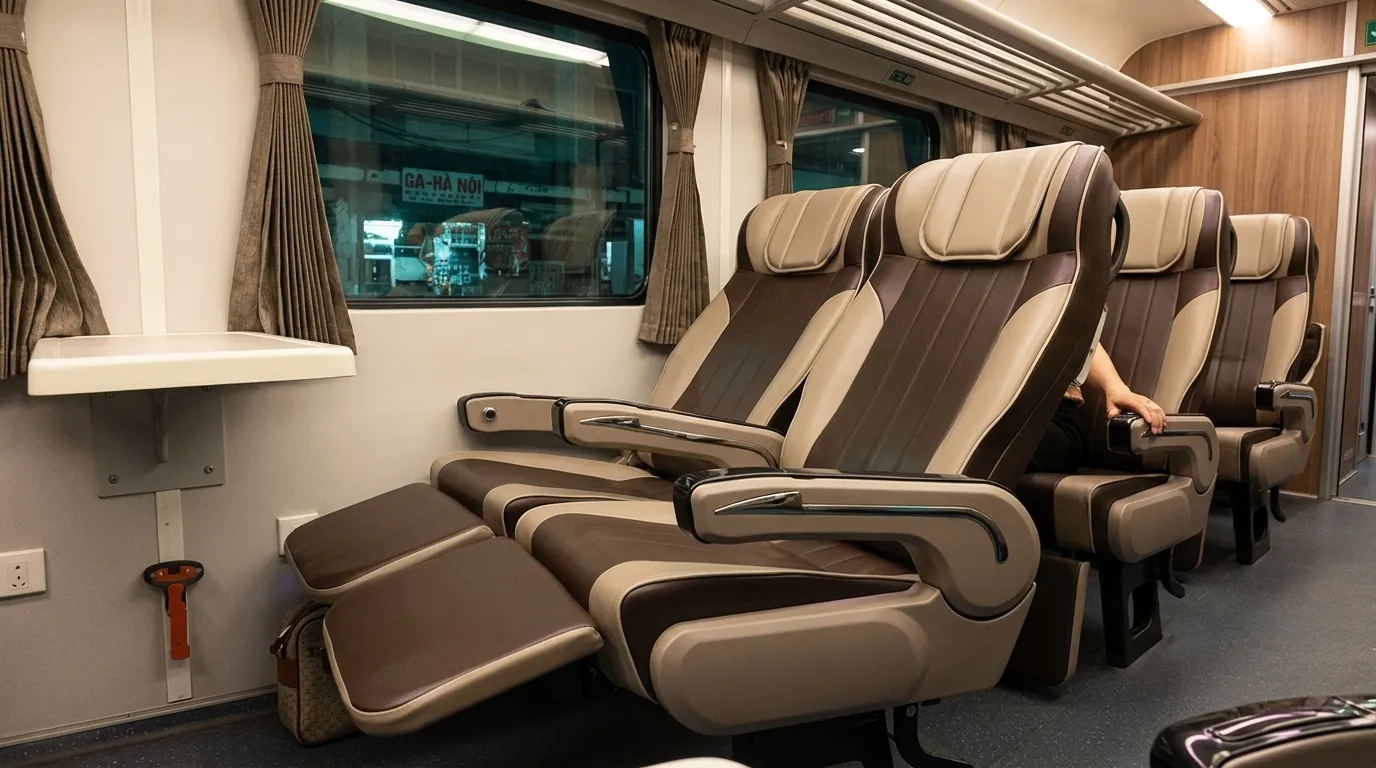
Luggage, Food, and Onboard Realities
Vietnamese iced coffee on a train tray table inside a soft seat carriage.
Train travel in Vietnam is wonderfully pragmatic. There are no strict weight limits enforced at the station, though the official allowance is 20kg per passenger. Soft seat carriages feature spacious overhead racks that easily accommodate standard carry-on suitcases and 50-liter backpacks, while larger check-in sized bags can be stored in the luggage alcoves at the end of the car.
Hungry? You won't starve. A food trolley rolls down the aisle several times during the journey. They sell hot coffee, instant noodles, boiled corn, and sometimes hot meals like rice with pork. It is cheap and cheerful. However, bringing your own snacks is highly recommended. Every station has convenience stores nearby. Buy some fresh fruit, a banh mi, and plenty of water before boarding.
Bathrooms are located at the end of each carriage. Modern SE trains usually have western-style toilets. They start the journey clean but can degrade as the hours pass. Bring your own toilet paper and hand sanitizer. It is a small price to pay for the convenience of rail travel. To secure your ideal carriage, book at vietnamesetrain.com.
6 Pro Tips for First-Time Train Travelers in Vietnam
Riding the rails here is easy, but a little insider knowledge goes a long way. According to The Man in Seat 61, the world's leading authority on train travel, knowing the quirks of the Vietnamese system is key to a smooth trip. Here is how to travel like a pro in 2026:
Mind the sun: When traveling south from Da Nang to Ho Chi Minh City in the morning, sit on the left side of the train to avoid the harsh direct sunlight (and get the coastal views). Traveling north? Sit on the right.
Book early for holidays: Soft seats sell out fast during Tet (Lunar New Year) and summer weekends. Use our Book Vietnam Train Tickets Online: 2024 Booking Guide [New Tips] to navigate peak season availability.
Print your ticket or save the PDF: You do not need a physical ticket, but you must have the QR code saved on your phone. Cell service drops in the mountains, so don't rely on loading your email at the gate.
Ignore the station touts: When you arrive at the station, people might offer to "help" you find your train for a fee. Ignore them. The electronic departure boards are in English and very easy to read.
Bring a jacket: We cannot stress this enough. The air-conditioning is set to "arctic."
Embrace the delays: Vietnam Railways operates on a single-track system. If a train has to wait for another to pass, delays happen. A 3-hour trip might take 3.5 hours. Relax. It is part of the experience. For more fundamental advice, check out our Tips & Tricks for First-Time Train Travelers in Vietnam.
Frequently Asked Questions
How much do Vietnam train soft seats cost?
Vietnam train soft seats typically cost between $8 and $20 depending on the distance traveled, how far in advance you book, and the class of the train (SE express trains cost slightly more than slower TN trains).
Do soft seat carriages on Vietnam trains have air conditioning?
Yes, all carriages labeled "Ngồi Mềm Điều Hòa" (Air-conditioned soft seats) feature very strong, reliable air conditioning. The AC is often kept quite cold, so passengers are highly advised to bring a light jacket or sweater onboard.
Are Vietnam train soft seats comfortable for long trips?
They are highly comfortable for daytime trips under 6 hours. They offer a 45-degree recline, roughly 30% more legroom than a domestic economy flight, and modern amenities like tray tables and power outlets on newer SE trains.
What are the best routes to book soft seats?
Soft seats are ideal for scenic daytime journeys lasting 2 to 6 hours. The most popular routes include Da Nang to Hue (which crosses the stunning Hai Van Pass), Ho Chi Minh City to Phan Thiet, and Nha Trang to Quy Nhon.
What is the luggage allowance for soft seat passengers?
Each passenger is officially allowed up to 20kg of luggage. You can store smaller bags and backpacks in the spacious overhead racks above your seat, while larger suitcases can be placed in designated luggage areas at the ends of the carriage.
How far in advance should I book Vietnam train soft seats?
It is recommended to book your tickets at least two weeks in advance for popular daytime routes to ensure you get a window seat or can sit together with your travel companions. During peak seasons like Tet, book at least a month ahead.